Enterprise · Infragistics · Goals and OKRs
Slingshot OKRs
Slingshot is a productivity platform at Infragistics. I owned the design of its Goals and OKRs experience: the end-to-end product design and onboarding for executives and distributed teams.
How the OKR model works:
Progress rolls up from the key results to the objective. Check one to see the objective move.
Try it. Tick the key results below.
Objective
Grow our inbound marketing pipeline
1 of 3 key results done · 33%
Context
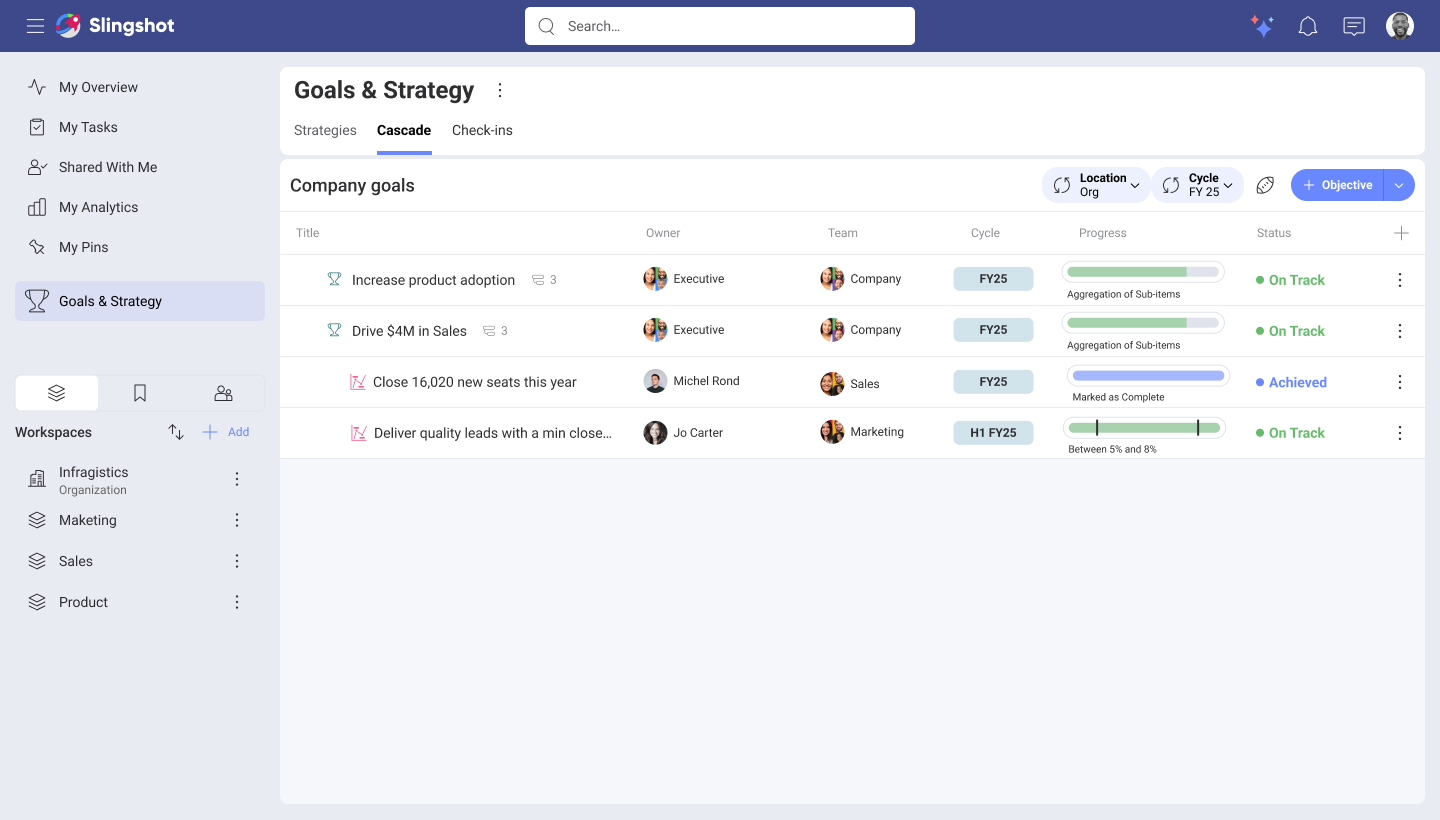
Slingshot is a task management platform. Leadership wanted to add a strategic layer on top of it, connecting day-to-day task tracking to what the company was actually trying to achieve, so they brought in Goals and OKRs: an area clear enough for executives skimming progress and precise enough for the people doing the work.
My role
I took ownership of the Goals and OKRs platform and managed the end-to-end product design and onboarding experience. I worked from research: interviews with managers and directors at companies using Slingshot, which I used to define requirements alongside the product manager and the team. Partnering directly with the CEO, I translated executive vision into a specialized experience that evolved the design system while maintaining strict architectural consistency, managing the conversations, planning, and feature prioritization along the way.
The challenge
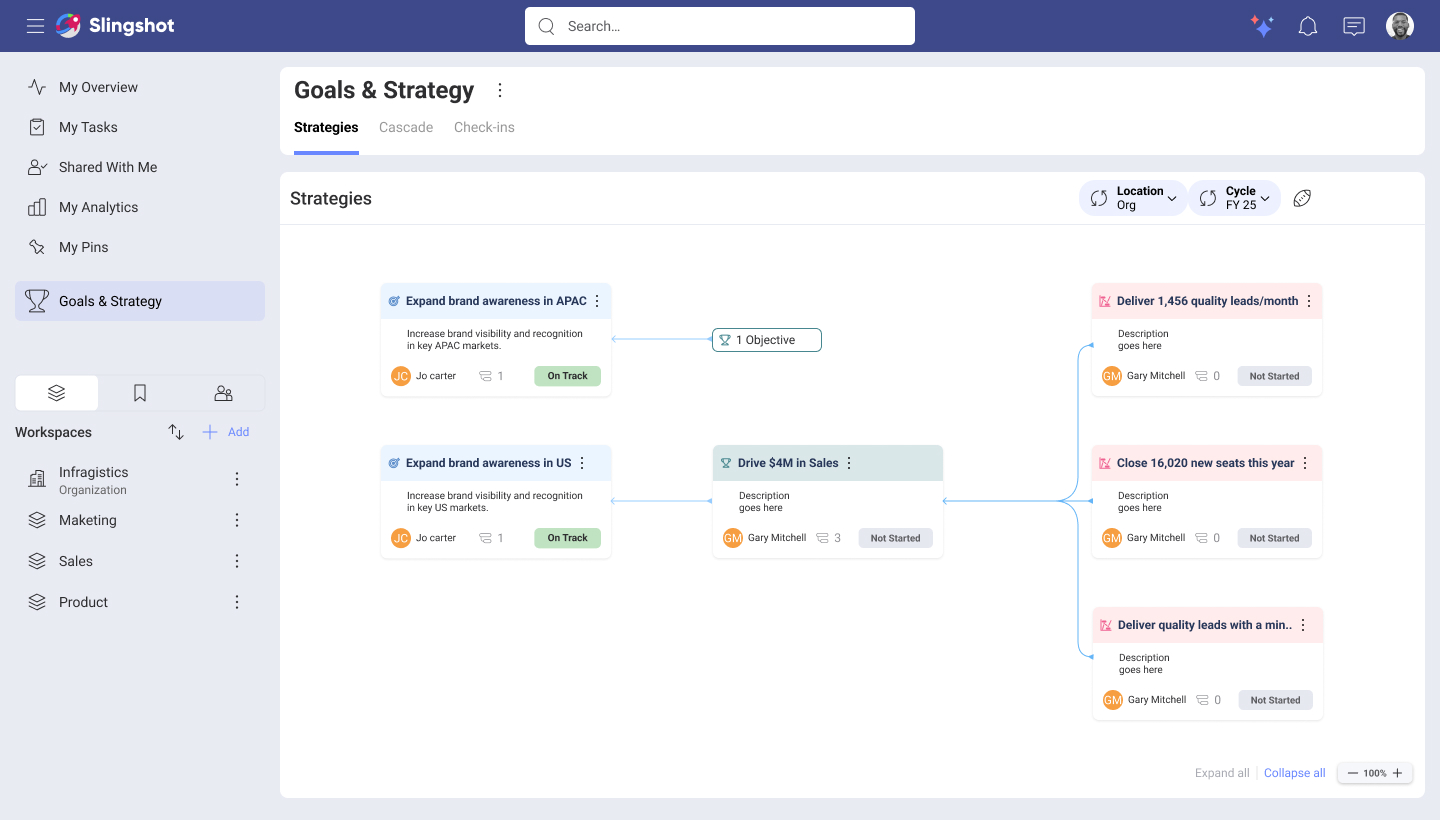
OKRs are simple to explain and hard to make usable: nested objectives and key results, progress that rolls up, and different needs for executives versus contributors. The onboarding had to get a first goal created without a training session.
What I did
I designed the objective and key-result structure, the progress roll-up, and an onboarding flow that guided a new team to their first OKR. I extended the design system to cover the new patterns without breaking consistency with the rest of Slingshot.
Outcome & reflection
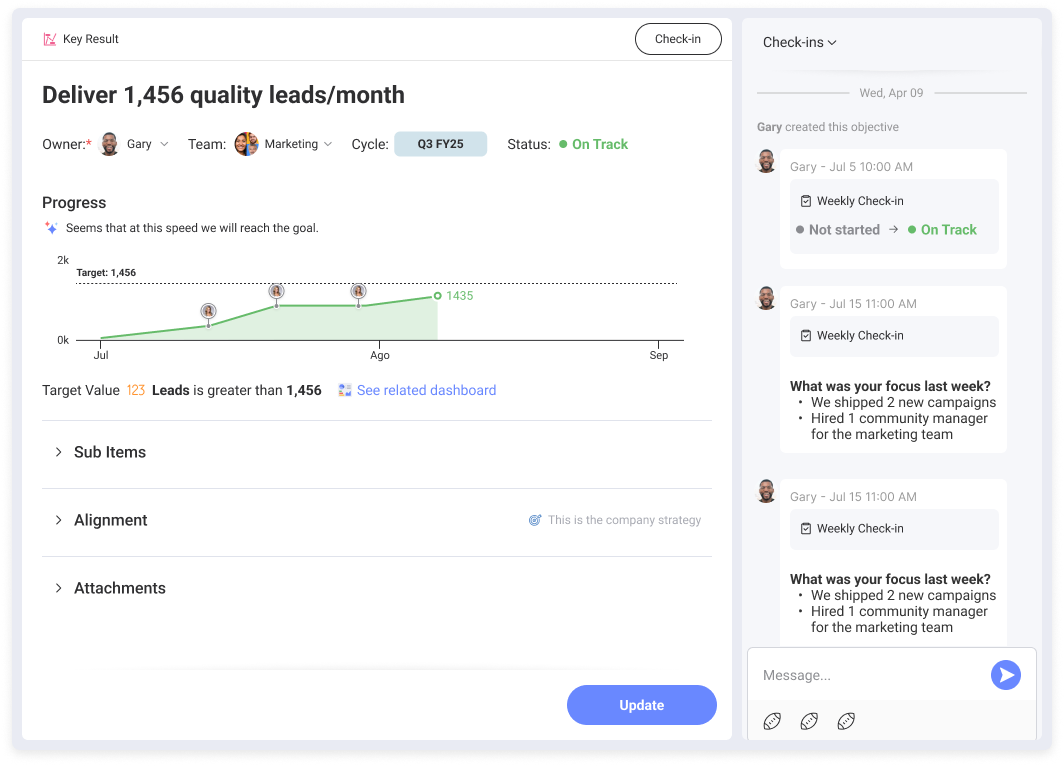
Turned a high-level vision from the CEO into a concrete feature, goals, and OKR framework that gave the team clear direction and decision-making guardrails for the new feature.
Even as scope shifted and not every detail shipped as originally planned, the framework I built remained the team’s reference point for aligning on what mattered and why. It’s a good example of how I work directly with leadership to translate ambiguity into structure the rest of the team can act on.